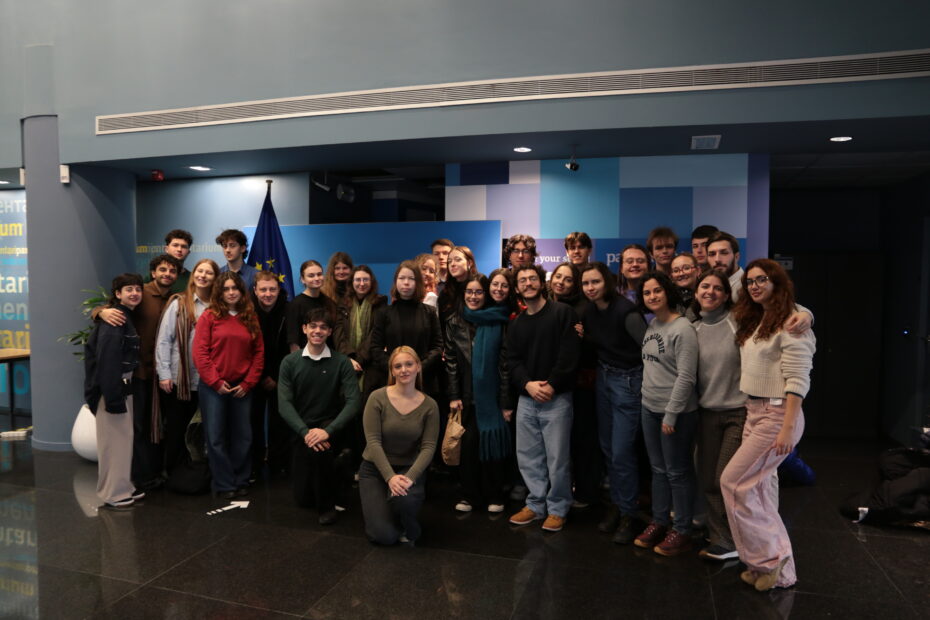
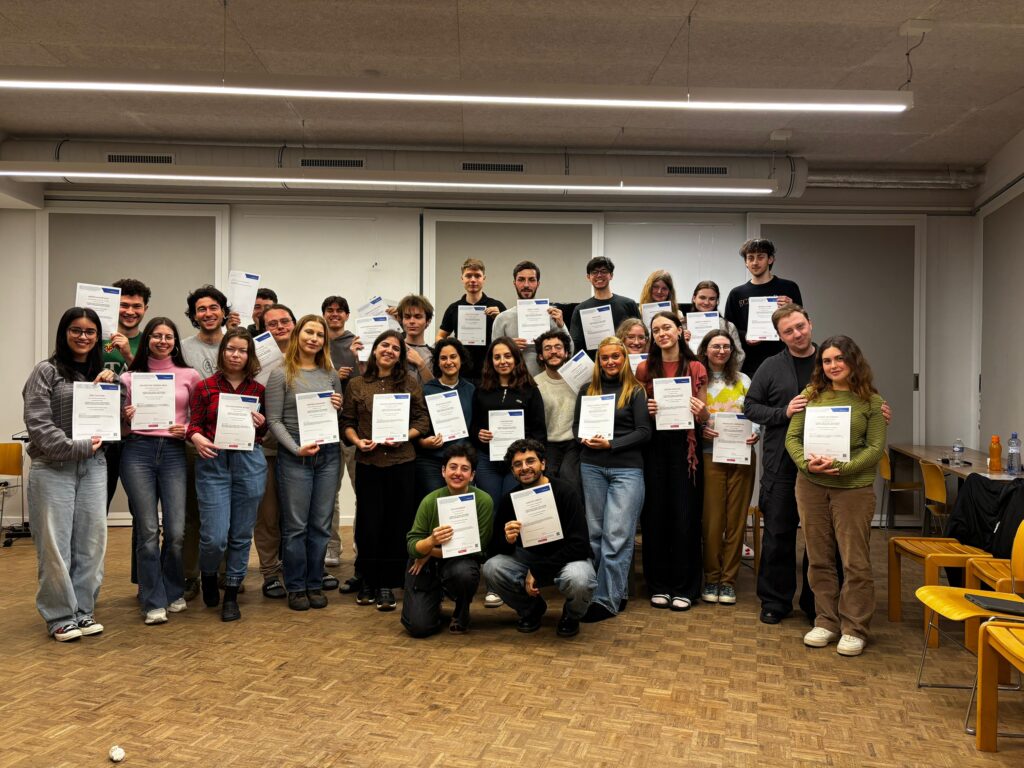
From 14 to 23 February 2026, Cesta rozvoje organised the international Youth Participation Activity Leaders for Change, bringing together 30 young people from the Czech Republic, Poland, Italy, Spain and Portugal for an intensive learning journey in Ochoz u Brna and Brussels. Through workshops, discussions, simulations and institutional visits, participants explored youth leadership, democratic participation, European values and the representation of LGBTQ+ people in public life.
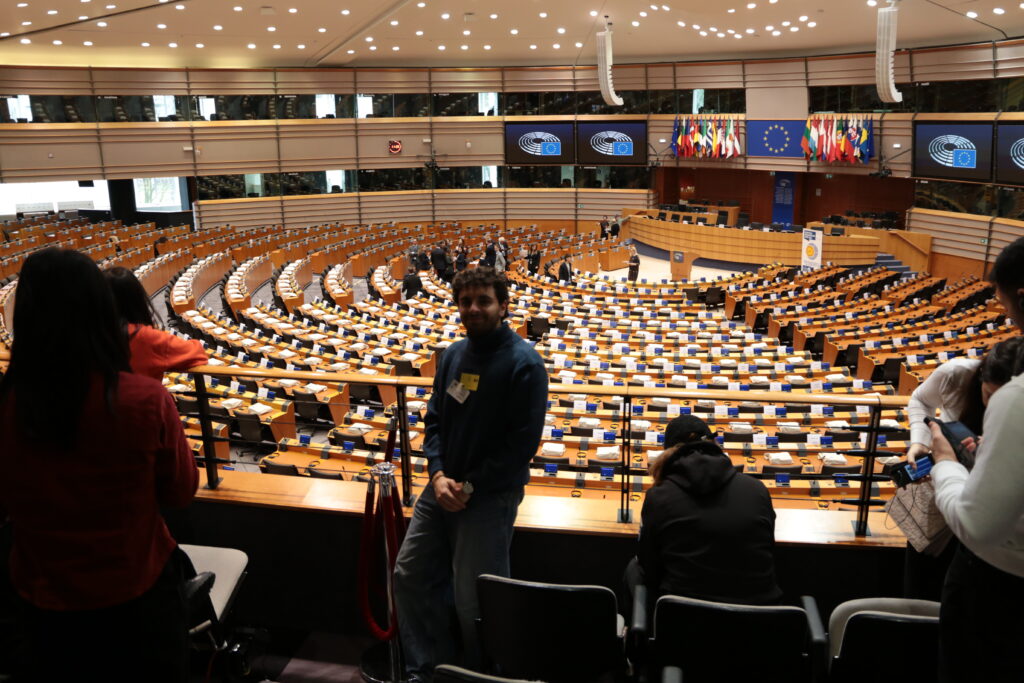
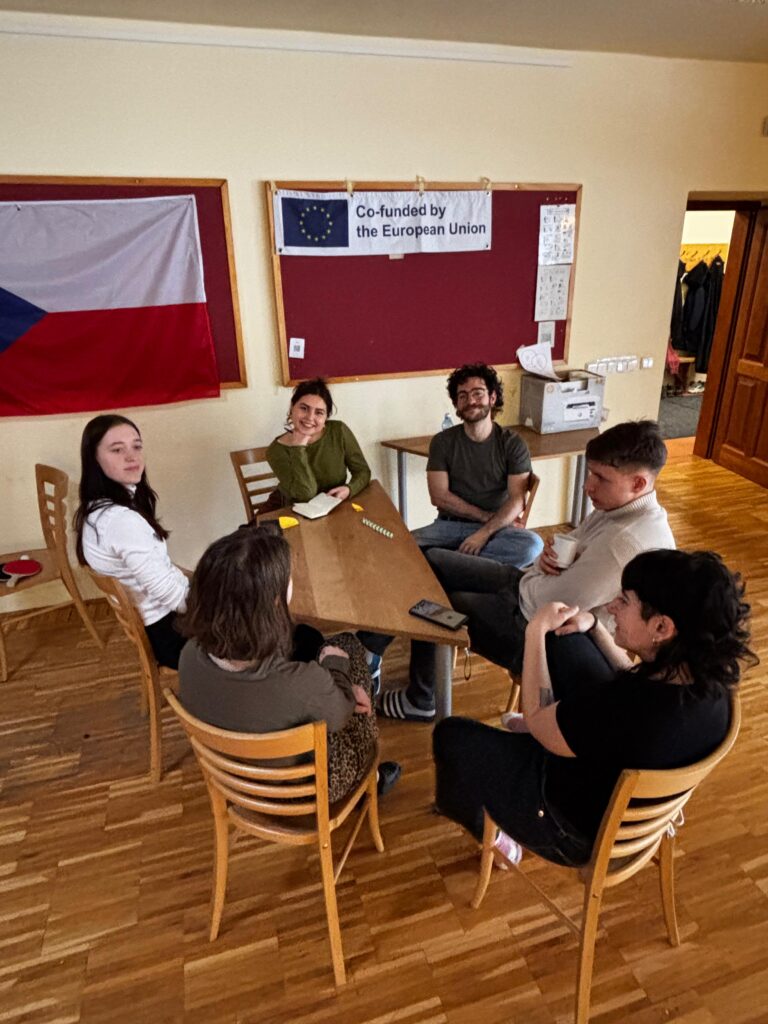
The project was designed as a space where young people could not only learn about European democracy, but also actively experience it. During the first part of the programme in Ochoz u Brna, participants built an international learning community and engaged in non-formal educational activities focused on civic engagement, inclusion and leadership. In the second part, the group travelled to Brussels, where they connected their reflections to the real environment of European institutions.
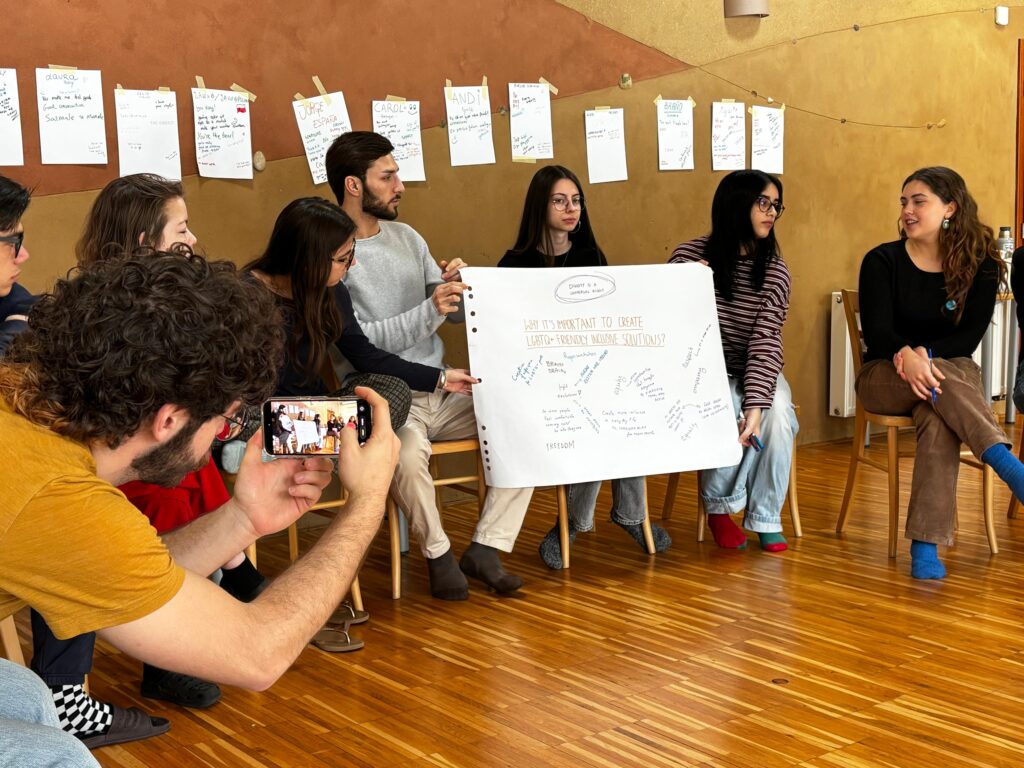
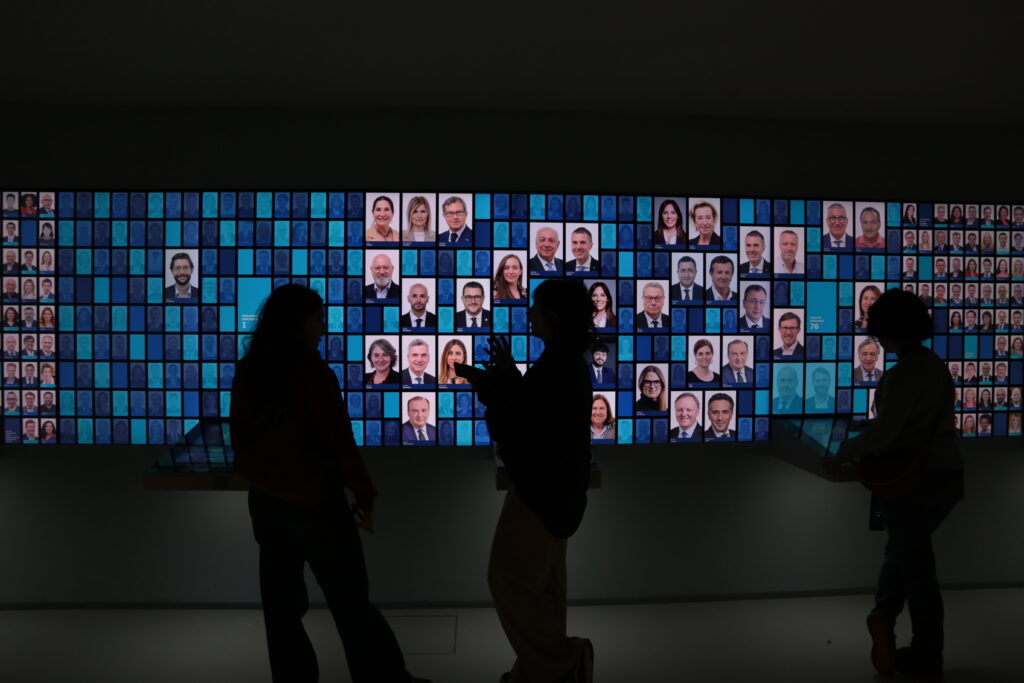
One of the highlights of the project was the visit to the European Commission, where participants attended two sessions that helped them better understand how the European Union works in practice and how equality policies are developed. These inputs were later transformed into concrete work during the final simulation, where participants stepped into the role of policymakers and developed their own proposals aimed at strengthening inclusion and representation across Europe.
What made this project particularly meaningful was that it did not end with reflection alone. Participants worked in international teams and produced a set of policy proposals focused on five key areas where they identified important challenges for LGBTQ+ people and young people more broadly: human rights and diversity, youth participation, healthcare, employment and social affairs, and culture and education.
From discussion to concrete proposals
In the field of human rights and diversity, participants focused on the importance of inclusive language, stronger protection against discrimination, and the need for public institutions to better reflect gender diversity in their communication and legal frameworks. Their ideas included more inclusive wording in official documents, EU-level inclusive communication guidelines, awareness campaigns, stronger recognition of violence against LGBTQ+ people as hate crime, and more support for local initiatives working on equality and sensitisation.
In the area of youth participation, participants highlighted that young LGBTQ+ people are still too often protected only in principle, while not being sufficiently involved as active co-creators of policies that affect them. Their proposals called for dedicated consultation channels within the EU Youth Dialogue, permanent youth advisory structures, targeted funding for civic empowerment initiatives, stronger support for rural areas, and better monitoring of participation, accessibility and safety in engagement spaces.
When discussing healthcare, the participants pointed to the continuing barriers many LGBTQ+ people face in medical settings, including prejudice, lack of trust, invisibility and inadequate professional preparation. Their proposal called for stronger anti-discrimination measures in healthcare systems, more education for medical professionals, more inclusive eldercare, and better protection of bodily autonomy and dignity.
In the field of employment and social affairs, participants focused on the gap between symbolic corporate messaging and real inclusion in everyday working life. One of their most concrete ideas was the creation of a European Corporate Inclusivity Index – a transparent, EU-regulated tool that would help employees, customers and the wider public assess whether companies truly support LGBTQ+ inclusion through their policies, workplace culture and public behaviour.
Finally, in culture and education, participants stressed that visibility, representation and historical recognition matter. Their proposals included stronger inclusion of LGBTQ+ topics in museums and exhibitions, more educational support for teachers and school psychologists, media literacy and debunking workshops, funding for local Pride-related activities in smaller towns, and the creation of verified digital tools mapping safe and inclusive spaces.
Why this matters
The policy proposals developed during the project show that young people are not only ready to discuss social challenges, but also capable of formulating thoughtful and practical responses to them. Rather than staying at the level of abstract debate, participants worked on ideas connected to legislation, education, communication, public services, civic structures and community life. Their work demonstrated that youth participation becomes most meaningful when young people are trusted not only to speak, but also to propose, analyse and create.
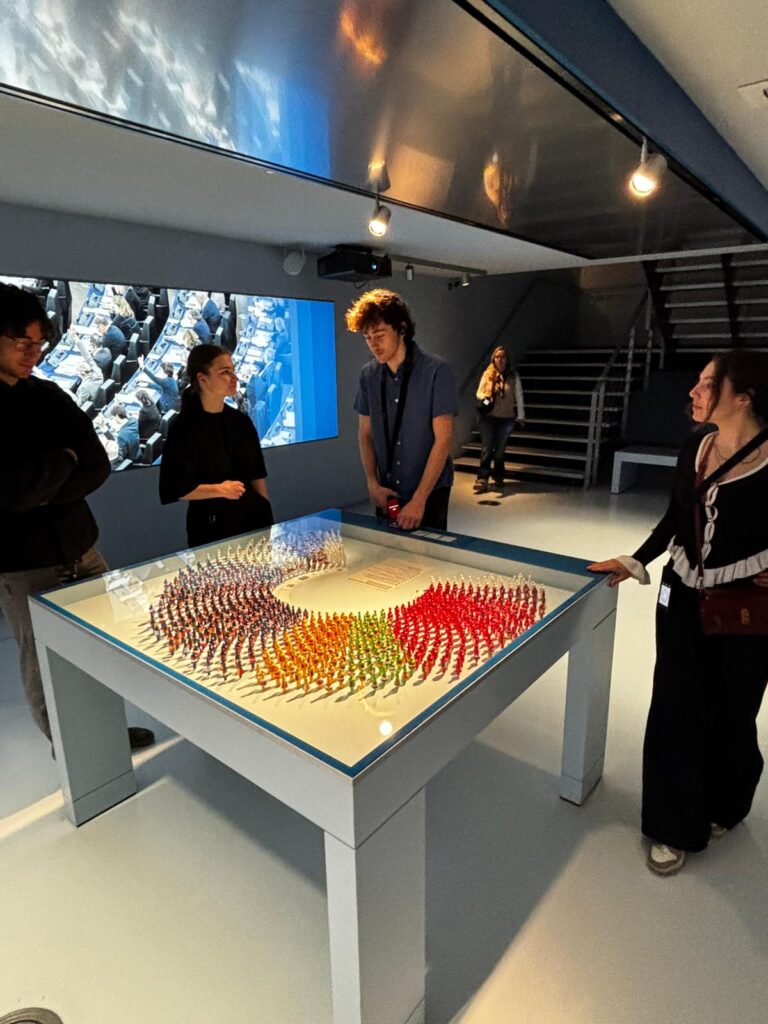
The project also showed how international learning can widen perspectives. By bringing together participants from five countries with different backgrounds and experiences, Leaders for Change created space for dialogue that was both personal and political. The result was not only a stronger understanding of European institutions and democratic processes, but also a deeper reflection on equality, dignity and belonging in contemporary Europe.
Voices from the project
The impact of the experience is best captured by the participants themselves:
“Experiences like this remind me that European democracy is shaped not only within its Institutions, but also by engaged young people whose ideas and perspectives help drive change.”
“I return from this experience inspired and motivated, with new friendships, fresh ideas, and practical tools to apply in future projects.”
“Learning from participants representing five different countries allowed us to challenge our assumptions, broaden our perspectives and gain not only knowledge on the topic but also leadership, communication and teamwork skills.”
These testimonies reflect exactly what Leaders for Change aimed to achieve: creating a space where young people can build skills, develop confidence, strengthen their civic awareness and actively engage with issues that matter for the future of Europe.
Participants’ policy proposals
During the final simulation, participants worked in international teams to develop policy proposals on inclusion, participation and equality. You can read the full document here:
Conclusion
For the consortium, Leaders for Change was more than an international mobility project. It was a practical example of how youth participation can be transformed into real learning, meaningful dialogue and concrete civic output. At a time when questions of equality, democracy and inclusion remain central across Europe, it is essential to support young people not only as participants in discussions, but as contributors to change.
We are grateful to all participants, facilitators and partners who helped create this inspiring learning experience, and we believe the ideas developed during these ten days will continue to resonate far beyond the project itself.
Acknowledgement
Funded by the European Union. Views and opinions expressed are however those of the author(s) only and do not necessarily reflect those of the European Union or the Czech National Agency. Neither the European Union nor the granting authority can be held responsible for them.