How can young people influence democracy in an increasingly digital world? What challenges does digitalisation bring, and how can technology help us become more active citizens?
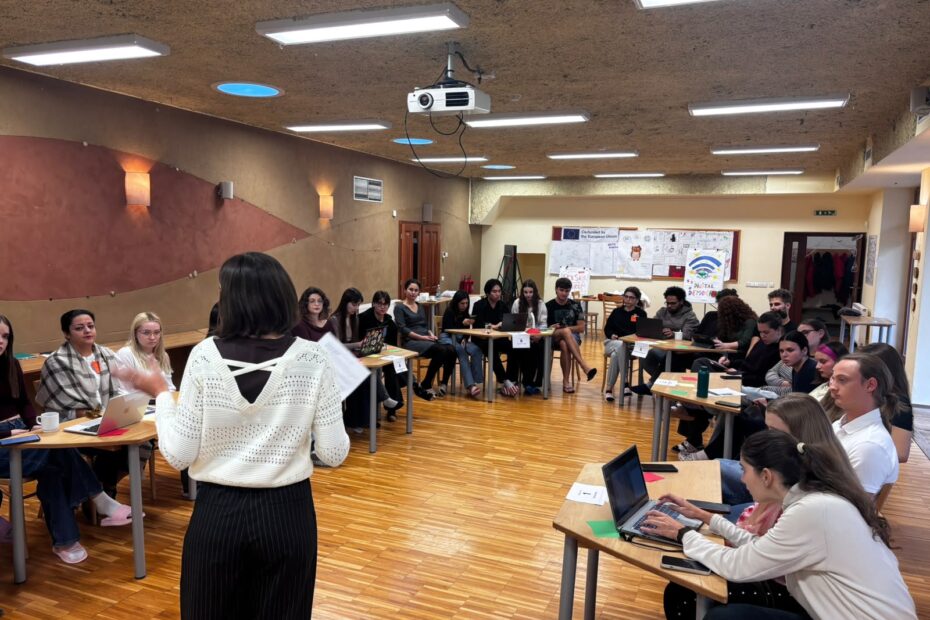
These were some of the questions explored by 30 participants from the Czech Republic, Slovakia, Poland, Italy, Spain and France during Democracy 2.0: Youth Voices in the Digital World, an Erasmus+ youth exchange held in Ochoz u Brna, Czech Republic, from 26 October to 4 November 2026.
Throughout the exchange, participants explored democracy, digital participation, civic engagement and the role of technology in shaping our societies. Through discussions, creative activities, teamwork and simulations, they gradually moved from exploring the topic to developing their own ideas and recommendations for improving digital democracy.
Democracy is more than politics
The programme began with activities focused on getting to know each other, building trust and creating an environment where participants could feel comfortable sharing their opinions. Together, they explored their expectations, fears and contributions to the project, while gradually building an international group ready to discuss sometimes complex and challenging topics.
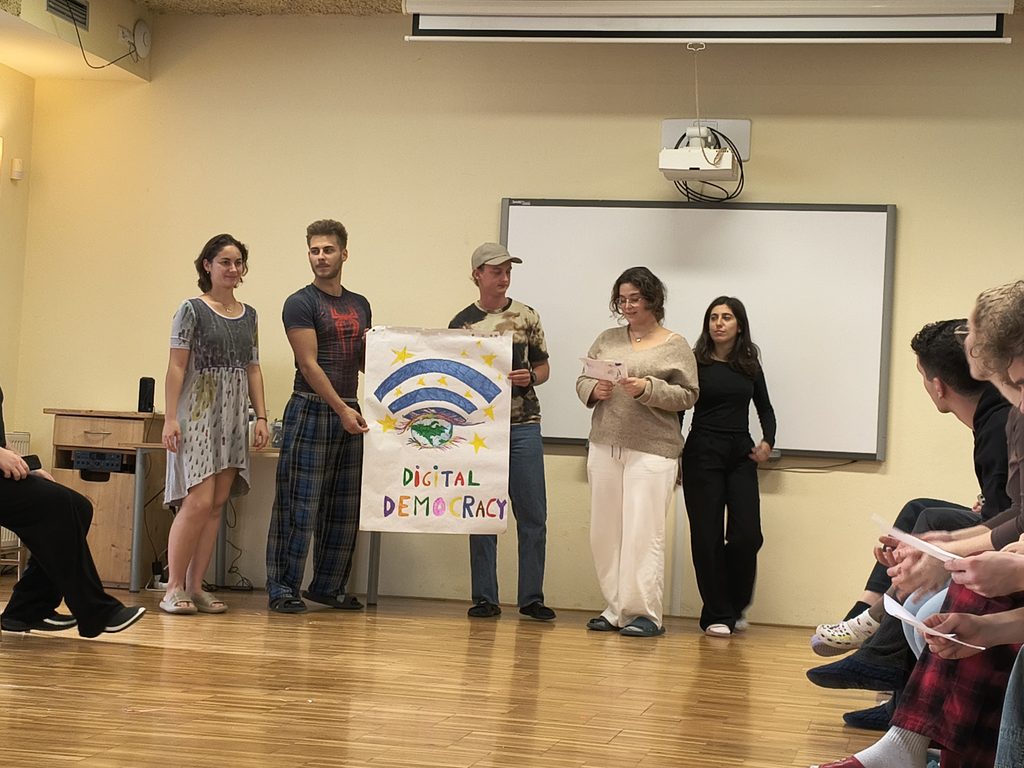
Participants explored how democracy works, the role of citizens in decision-making, European institutions and the different ways people can participate in public life. They also discussed how digital technologies are changing democratic processes, from online participation and petitions to disinformation, artificial intelligence and cybersecurity.
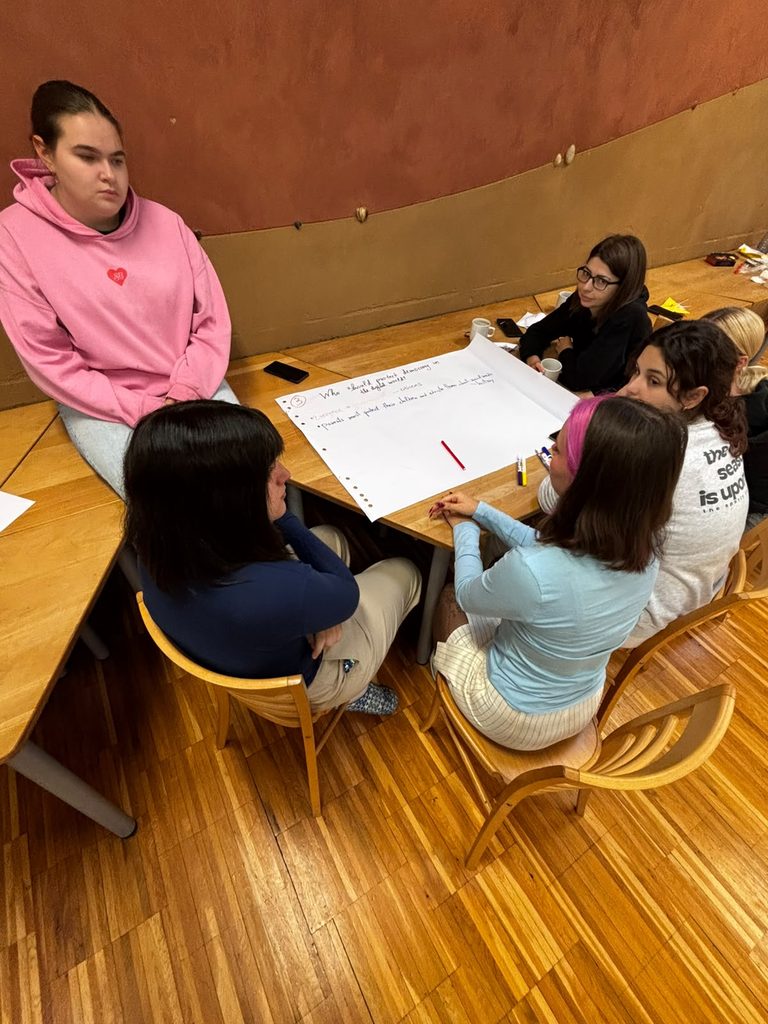
Rather than relying only on theoretical discussions, the programme encouraged participants to learn through experience, creativity and cooperation. They worked in teams, exchanged perspectives from their own countries and challenged each other’s ideas.
Learning through creativity, debate and real-life experiences
Some of the activities took participants beyond the workshop room. In Brno, they conducted interviews with people in the streets to find out how much the public knows about democracy. They then worked with the collected material and created videos, combining creativity, communication, teamwork and different perspectives on democratic participation.
Other activities included theatre and role-playing, debates, creative group challenges and exploring threats to democracy. Participants developed their own ideas, presented their findings and learned to approach problems from different perspectives. These activities encouraged them to express themselves, listen to others, work together and sometimes step outside their comfort zones.
Intercultural evenings and informal group activities also played an important role. Participants had the opportunity to share their cultures, traditions and experiences, build friendships and discover how different backgrounds can enrich discussions about democracy and society.
From ideas to policy proposals
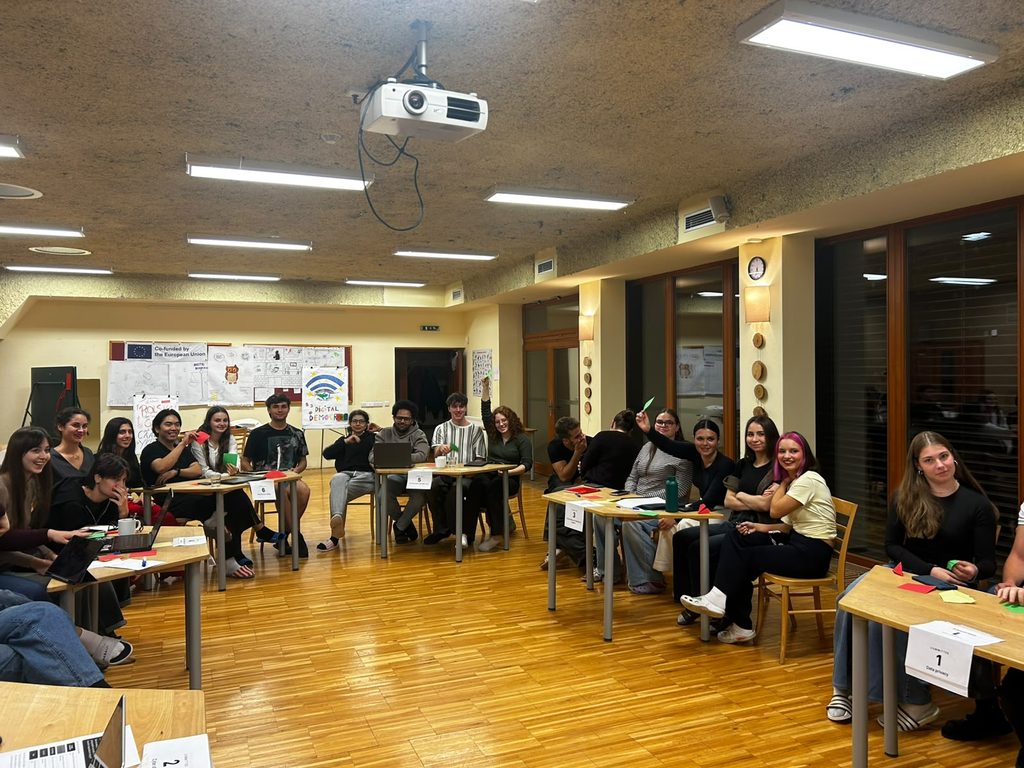
One of the central parts of Democracy 2.0 was a simulation of a multi-stakeholder conference. Participants took on different roles and explored digital democracy challenges from the perspectives of various actors involved in decision-making.
The simulation challenged them to discuss complex issues, defend their positions, negotiate with others and look for possible solutions. It was an opportunity to put their knowledge into practice and experience how difficult it can be to reach agreement when different interests and perspectives are involved.
Working together, participants developed six policy proposals addressing key issues in the digital world:
- Data privacy
- Disinformation and fake news
- E-voting
- Artificial intelligence
- Censorship and freedom of speech
- Cybersecurity and democracy
The proposals reflect the ideas, concerns and recommendations developed by the participants throughout the exchange. They are the result of discussions, teamwork, research, negotiations and a collective effort to turn ideas into concrete recommendations for decision-makers.
Read the complete youth policy proposals:
What did participants take away from the exchange?
Learning about democracy was not limited to understanding political institutions or digital tools. Participants also reflected on their own role as citizens, the importance of communication, cooperation and critical thinking, and the need to actively express their opinions.
The final evaluation confirmed that the exchange was a meaningful learning experience. Participants rated the overall quality and relevance of the activities 8.8 out of 10 on average. Their perceived improvement in understanding democratic mechanisms was rated 8.1 out of 10.
Participants particularly appreciated activities that allowed them to be creative, interact with others and put their learning into practice. Street interviews and video creation, theatre activities, group work, intercultural activities and the policy-making process were among the experiences highlighted in their feedback.
The exchange is over, but the ideas continue
Democracy 2.0 brought together young people from different countries and backgrounds around a shared question: how can we make democracy more accessible, inclusive and meaningful in the digital age?
Over the course of the exchange, they explored challenges, exchanged perspectives, created content, participated in simulations, debated ideas and developed their own policy recommendations. Most importantly, they experienced that democracy is not only something discussed in institutions. It is also about listening, cooperation, respecting different opinions, taking initiative and being willing to participate.
The policy proposals developed during the exchange are one step towards bringing these ideas beyond the project itself. We hope they will encourage further discussion, inspire other young people and contribute to conversations about digital democracy and youth participation at local and European levels.
Because young people should not only be affected by the decisions shaping their future. They should also have the opportunity to help shape them.
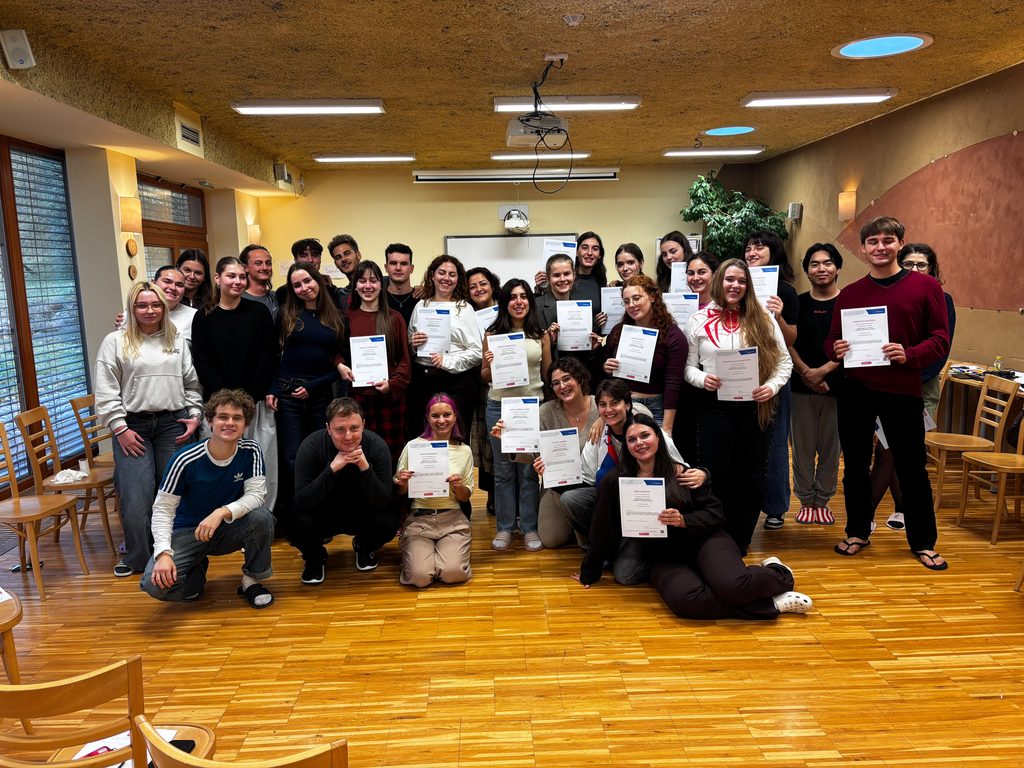
Democracy 2.0: Youth Voices in the Digital World was implemented with the support of the Erasmus+ programme of the European Union.
Views and opinions expressed are however those of the author(s) only and do not necessarily reflect those of the European Union or Czech National Agency (DZS).